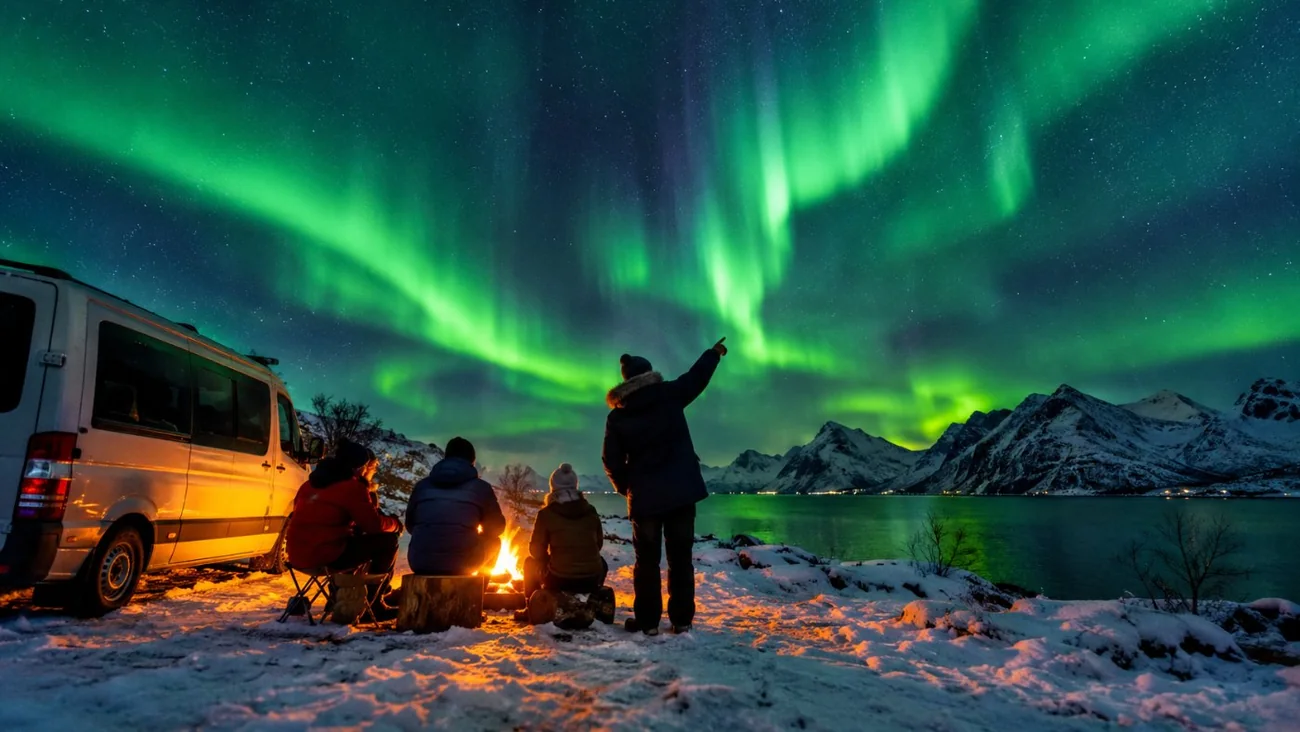
Booking choice: The minibus chase with photos, about 6 hours. Book this Tour details
Tromsø sits right under the auroral oval, the ring of sky where the northern lights are most frequent. Visit Tromsø gives the season as late August to early April and notes that strong solar activity has little effect on what happens directly under the oval. In plain terms: the sun is rarely your problem here. The sky is.
Coastal Tromsø is cloudy a lot of the time. Darkness, cloud, cold and daylight all shift from month to month, and those four things are what you are really choosing between.
The quick answer
Come between late September and late March and stay at least three or four nights. October and late February to mid-March suit most people best: long dark evenings, the equinox boost in geomagnetic activity, and milder weather or more daylight than midwinter. December and January are the darkest months and also the cloudiest on the coast. No month guarantees a sighting; cloud is what decides.
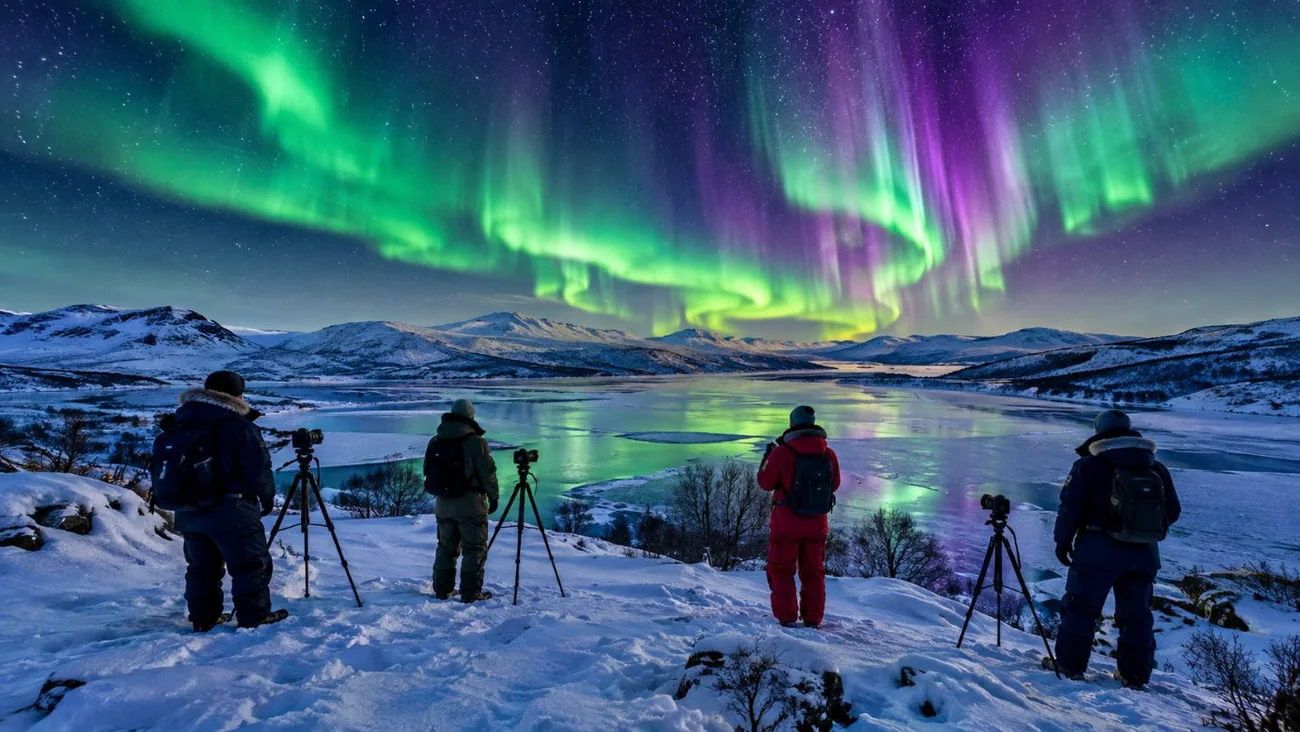
What is the best month to see the northern lights in Tromsø?
October and late February to mid-March, for most visitors. Both give long dark evenings with fewer cloudy weeks than midwinter, and both sit near an equinox.
The table pulls together the long-term weather averages for Tromsø from WeatherSpark with the darkness pattern. The sky column is the share of time the sky is clear, mostly clear or partly cloudy. It looks low because it is. That is the reason every tour here is built around driving to clear sky.
| Month | Dark evenings | Clearer skies | Average temp | Good to know |
|---|---|---|---|---|
| September | From mid-month | About 34% | 7 °C | Mild, no snow yet, autumn colours, equinox |
| October | Long | About 26% | 3 °C | Our pick for a first trip: dark, rarely bitter |
| November | Very long | About 23% | -1 °C | Snow arrives, quieter weeks before Christmas |
| December | Polar night | About 21% | -2 °C | Darkest and cloudiest, busy at Christmas |
| January | Polar night, then twilight | About 21% | -4 °C | Deep snow, the sun returns mid-month |
| February | Long | About 22% | -3 °C | Snow, daylight for dogs and reindeer |
| March | Long until mid-month | About 24% | -2 °C | Equinox, more daylight, winter holidays |
| April | Short | About 31% | 1 °C | Season ends early in the month |
Our verdict: pick October if you hate the cold and like the lights over dark water before the snow settles. Pick February or early March if you want a snowy Arctic winter, daytime activities in daylight, and nights that are still long.
Long, dark October nights with a guide who follows the clear sky, and a thermal suit for the wait.
Book thisWhen does the northern lights season start and end in Tromsø?
From late August to early April. Most aurora tours start in early September, and the midnight sun hides the lights from about mid-April.
The Norwegian Centre for Space Weather at UiT puts the bright season at roughly mid-April to early September, when the sky never gets dark enough. At the edges of the season the dark window is short: in late August you are looking at an hour or two around midnight, and by late March the sky stays light until well into the evening.
From late September the nights open up fast. Tours run from early September and keep going until the light wins in early April.
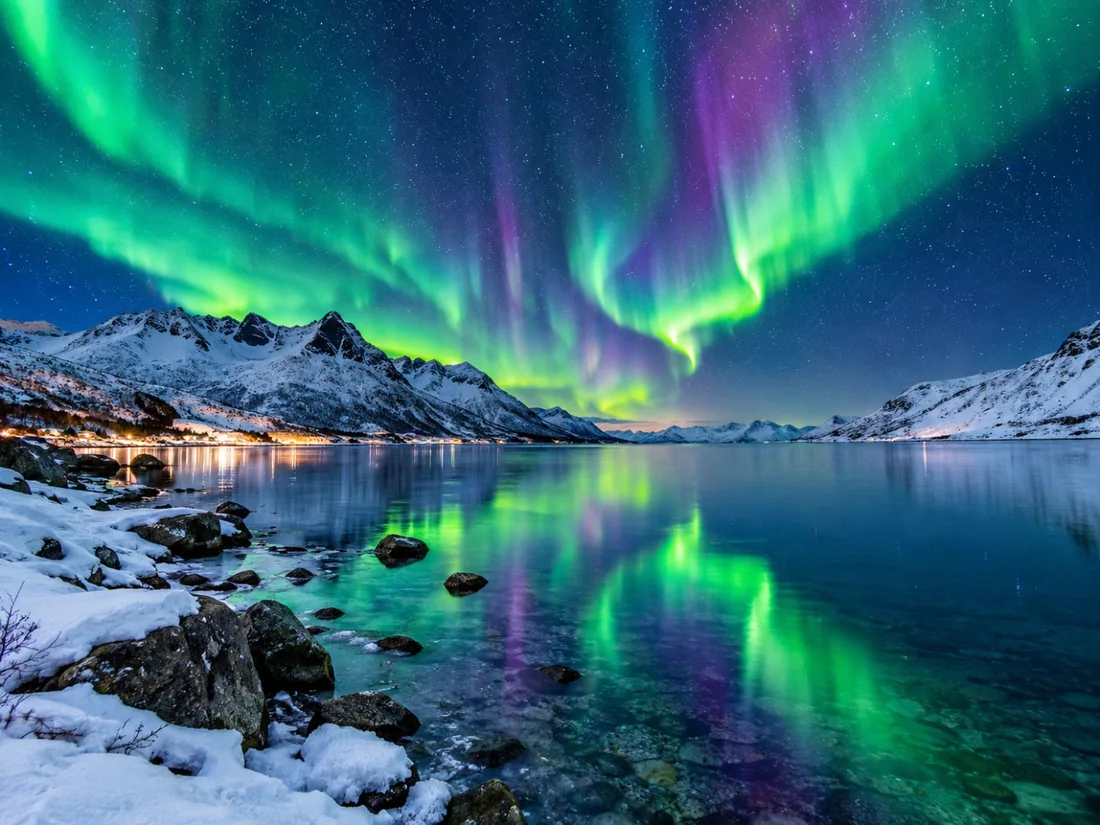
Can you see the northern lights in Tromsø in February?
Yes, February is one of the best months. The nights are still long, the snow is deep, and you get real daylight for sledding or sightseeing between the dark hours.
February is colder than October, with an average around -3 °C on the coast and much colder air inland, where the chases often end up. In return you get a white landscape that bounces moonlight around, and days long enough for dog sledding, reindeer or the cable car in daylight.
It is also busy. Winter school holidays across Europe fall in February and March, so hotels and small-group tours fill early. Book your nights first and the rest of the trip second.
Is 2026 a good year to see the northern lights?
Yes. The solar maximum very likely passed in October 2024, but the declining years of a cycle still bring big storms, and under the oval the cycle matters far less than the weather.
Space.com notes that the strongest flares often arrive years after a peak: cycle 23 peaked in 2001 and produced the Halloween storms of 2003, and a G4 storm lit up skies on 11 November 2025, well after this cycle's maximum. Fewer sunspots means fewer headline storms further south, in places like Germany or the UK.
For Tromsø the story is simpler. On a quiet night the oval still runs overhead or close by, so a clear sky usually shows something. A strong storm turns that into colour and movement across the whole sky. Our 2026-27 season outlook has more on what this winter looks like.
A strong storm or a quiet night, the guide drives to wherever the cloud breaks. Free cancellation up to 24 hours before.
Book thisAre September and March better because of the equinox?
Slightly, yes. Geomagnetic storms are more frequent around the equinoxes than near midsummer or midwinter.
The leading explanation is the Russell-McPherron effect: around the equinoxes, the tilt of Earth's magnetic field lines up with the sun's field in a way that lets more of the solar wind in. Citing British Geological Survey data, Space.com reports that a sizable magnetic storm happens on nearly twice as many days in March as in June or July.
It is a nudge, not a rule. Late September and mid-March also have shorter dark windows than December. Treat the equinox as a bonus on a trip you would take anyway.
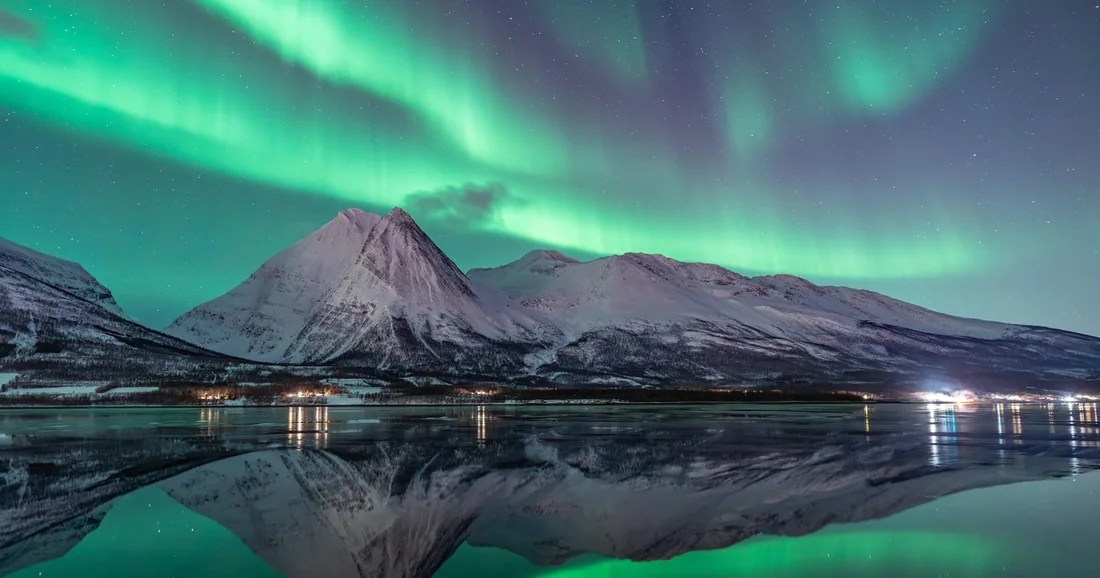
What time of night are the northern lights most active in Tromsø?
Usually between 20:00 and 02:00. A display can flare for a few minutes or keep going for an hour or more.
Both Visit Tromsø and the Tromsø space weather centre give 20:00 to 02:00 as the most active window. Lights can appear earlier on a dark winter evening, and late ones are common too. Activity tends to come in bursts, with quiet spells in between that can last an hour.
That is why the chase tours run about six hours or longer, and why the long no-limit small-group chase has no fixed end time on its longer option. If you go out on your own, give it at least an hour or two before you call it a night.
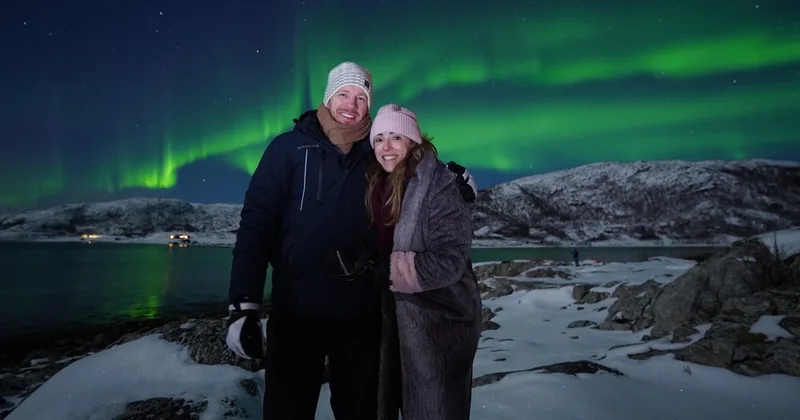
Fifteen guests at most and no set limit on time or distance on the long option, for the nights when the sky makes you wait.
Book this Tour detailsDoes the full moon or the polar night matter?
A bright moon washes out faint aurora but lights up the landscape for photos. The polar night, roughly 27 November to 15 January, gives the longest darkness and colourful midday twilight.
The space weather centre suggests checking the moon's rise and set times, since a full moon can drown a weak display. The photography tour listing puts the trade-off well: a new moon gives the darkest sky, a full moon a fainter aurora over a landscape you can actually see. Strong displays shine through moonlight without trouble.
During the polar night the sun stays below the horizon, from about 27 November to 15 January, but you still get a few hours of blue and pink twilight around noon. The polar night post has this winter's dates and what the days feel like.
Are there northern lights in Tromsø now, and how likely are you to see them?
On a dark night the oval is usually active over Tromsø. Your odds depend on cloud: check the forecast on the day, and plan three or four nights to give yourself several tries.
For tonight, look at the aurora forecast on Yr, which combines the Kp index with a 30 to 90 minute nowcast, and the live all-sky cameras from UiT. The NOAA 30-minute forecast shows where the oval sits right now. Then check cloud, because cloud is the real filter. Our forecast guide walks through all three.
On likelihood: the coast has clearer skies only around a fifth to a quarter of the time in midwinter. Inland it often looks better. The Finnish Meteorological Institute says auroras appear on about 75% of clear, dark nights at Kilpisjärvi, the Finnish border area where Tromsø chases often head on cloudy nights. Over three or four nights with a guide who will drive there, your chances are good. They are not certain, and anyone promising certainty is selling something.
A second try built in: if the camera catches nothing, the listing lets you rejoin on another night of your stay.
Book thisFrequently asked questions
What is the cheapest month to go to Tromsø for the northern lights?
Late October, November and early December tend to be easier on hotel budgets than Christmas, New Year and the February and March holiday weeks. Dark evenings are long in all of them.
Can you see the northern lights in Tromsø in April?
Only in the first days of the month, late at night. By mid-April the sky stays too light, and the season is over until late August.
Which month has the most clear nights in Tromsø?
On long-term averages, September and April have the clearest skies of the dark season, but they also have the shortest dark windows. In midwinter, clear skies are less common on the coast, which is why tours drive inland.
Is the aurora stronger in winter?
Not really. Geomagnetic activity peaks around the equinoxes in March and September. Winter gives longer darkness, which means more hours to catch whatever happens.
Ready to book
Choose your night
Free cancellation up to 24 hours before on every option here.

Northern Lights Minibus Chase with Photos
- Minibus transport, drop-off at central hotels
- Thermal suit and hot chocolate
- Bonfire while you wait for the sky
Small-Group Chase: We Drive Until We Find Them
- Small group, maximum 15 guests
- Choose 5 hours or the 6 to 8 hour unlimited chase
- Thermal suits, snacks and hot drinks
Northern Lights Bus Tour with Free Repeats
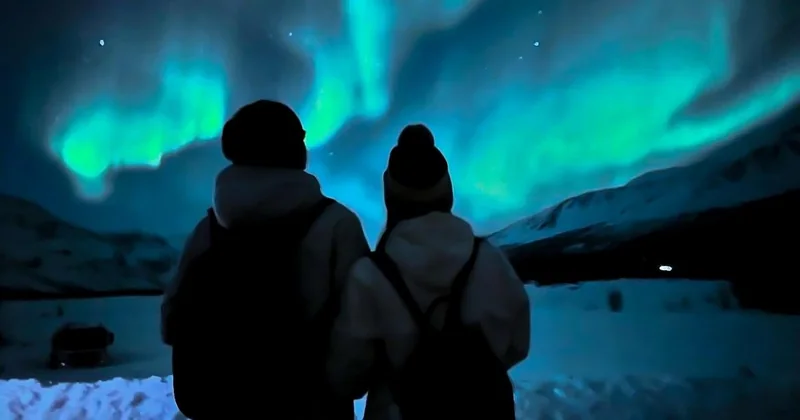
A second try is built in if the first night fails